
Mold Inspection & Testing
Surface and air sampling when you need to know what is growing and why.
Learn more →Black mold is a color, not a diagnosis. We will tell you what it is, how big the problem really is and remove it safely with containment and HEPA filtration.
Get a Free QuoteBlack mold is a color, not a species. Dozens of common household molds look black or dark green on drywall, grout and window sills, including Cladosporium and Aspergillus. The one people are usually worried about is Stachybotrys chartarum, which does appear black and slimy and prefers very wet paper and drywall. You cannot tell which one you have by looking, and in most homes it does not change what happens next.
What matters more than the species is how much there is, what it is growing on, and where the water came from. The removal protocol, though, is the same for black mold as for any other color.
The molds that look black like sustained moisture, and Bozeman supplies it in winter. With January lows around 12°F and homes sealed tight for heating season, warm indoor air condenses on cold surfaces: window frames, the inside face of exterior walls, bathroom ceilings and closet corners on north walls. That constant dampness is where dark speckling on paint and caulk begins.
The slimy, heavier growth on drywall and paper tends to follow real water: a burst pipe in a January cold snap, snowmelt coming through a basement wall, an ice dam leak soaking the top of a bedroom wall, or a slow leak under a sink. Those are the cases where Stachybotrys is more likely, because it needs materials to stay saturated for days. About 19 percent of Bozeman homes were built before 1970, and older plaster, paper-faced drywall and lath give it plenty to grow on.
Same careful protocol as any mold, with extra attention to not disturbing it.
Do not scrub, scrape or spray the area. Disturbing a colony releases spores into the room. Close the door, turn off any fan pointed at it, and send us photos. We reply the same day with a free estimate and a plan.
We measure the extent, meter the wall or ceiling for moisture, use thermal imaging to see how far the wet area runs behind the surface, and identify the water source. If you want species identification, we take a surface sample for the lab.
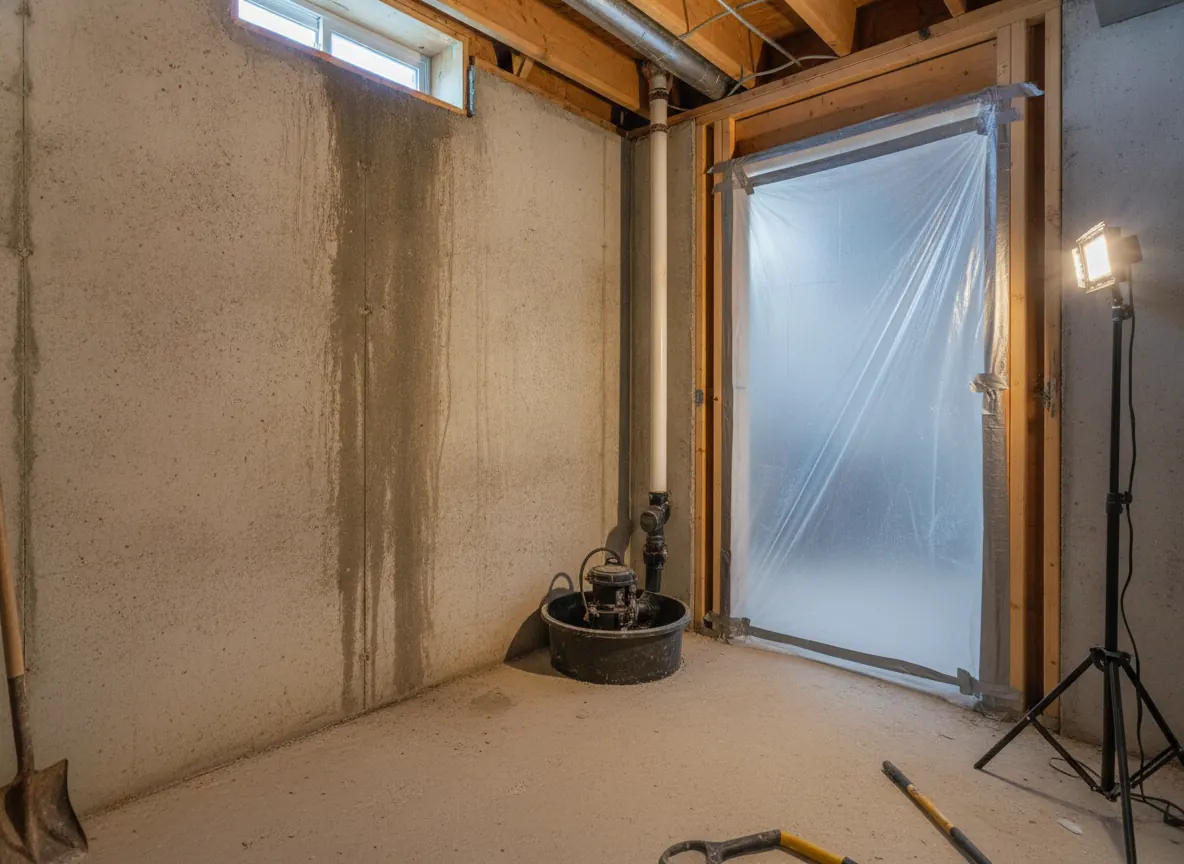
Plastic containment and HEPA air filtration under negative pressure isolate the work. Affected drywall, insulation or carpet is bagged and removed. Framing and hard surfaces are HEPA-vacuumed, cleaned with detergent and antimicrobial, and dried.
Every scope includes the moisture fix. Optional third-party clearance testing confirms the area is back to normal. Our technicians follow IICRC S520 guidelines for the whole job.
| Job | Typical range |
|---|---|
| Small contained area (bathroom, under 10 sq ft) | $500 – $1,500 |
| Basement (one area) | $1,000 – $4,000 |
| Mold inspection + air/surface sampling | $300 – $700 |
Black mold does not cost more to remove than any other mold; size, location and what it is growing on set the price. See the full price table and calculator on our mold remediation cost guide, or request a free quote for a written scope on your home.
Mold can affect people with asthma, allergies or other respiratory conditions, and some people react to it more than others. That is a good reason to deal with it promptly and to avoid disturbing it yourself. It is not a reason to panic, and it is not a reason to pay extra for a scary word. Montana has no mold license and no exposure standards, so be wary of anyone who tells you a lab number proves your home is dangerous.
If someone in your home has symptoms they think are related, see a doctor. On our side, we will tell you honestly how big the problem is, what it will cost, and what has to change so it does not come back.
Mold of any color can affect people, especially those with asthma, allergies or weakened immune systems, and the usual symptoms are respiratory irritation and allergy-type reactions. There is no reliable evidence that a particular color is uniquely toxic in a typical home. If anyone in your household has symptoms, talk to a doctor. Meanwhile, do not scrub or disturb the growth, and get the moisture source identified.
Not usually. The remediation is the same regardless of species: contain, remove the affected material, clean, dry and fix the water. A surface swab or tape lift sent to a lab can identify the species if you want it for a landlord, buyer or insurer, and it typically adds $200 to $300. We will tell you plainly whether that is worth the money in your situation.
Bleach is not the answer for a growing colony on porous material. MSU Extension’s guidance is to clean with detergent first and use a 1:10 bleach solution only afterwards on hard surfaces, and to call a professional when growth exceeds about 15 square feet. On drywall, carpet or wood, bleach wets the surface, does not reach the roots, and the mold returns. Removal and drying is what works.
The same as any mold of the same size and location. A small contained area under 10 square feet typically runs $500 to $1,500 in the Bozeman area. A basement area runs $1,000 to $4,000. Lab identification is optional and adds $200 to $300. Our cost guide covers every typical range and the square-foot calculator.
For a small, contained area, most households stay home. We build plastic containment around the work and run HEPA air filtration under negative pressure, so the rest of the house is isolated. If the growth is extensive, in an HVAC system, or someone in the home is medically sensitive, being out during demolition days is reasonable. We will give you a straight recommendation in the written scope.
Surface and air sampling when you need to know what is growing and why.
Learn more →Snowmelt, water table and sealed-basement moisture below grade.
Learn more →Typical Bozeman-area price ranges, a square-foot calculator and the factors that move a quote up or down.
Learn more →This service is available across Bozeman & the Gallatin Valley, MT, including:
See all service areas or learn how our process works.
Tell us what you're seeing. We reply fast, usually the same day, with a clear plan and typical pricing.