
Mold Inspection & Testing
Visual inspection, moisture mapping and air or surface sampling when you need to know what you are dealing with before anyone opens a wall.
Learn more →Inspection, testing and removal for homes, rentals and small commercial buildings across Gallatin County, Livingston and Ennis. Written scope before we start, containment and HEPA filtration while we work, and a plan to fix the moisture so it does not come back. Whether you call it mold removal, mold mitigation or mold remediation, the job is the same: fix the moisture, remove the growth, verify the air.
Every job starts with a look at where the water is coming from. From there we match the work to the problem, not the other way around.
Visual inspection, moisture mapping and air or surface sampling when you need to know what you are dealing with before anyone opens a wall.
Learn more →Finished and unfinished basements, foundation seepage, sump areas and the tight, radon-sealed lower levels common in Gallatin County.
Learn more →Damp crawl spaces under older homes and valley properties with shallow groundwater, including vapor barrier and ventilation advice.
Learn more →Ice-dam leaks, bathroom fans venting into insulation and winter frost on sheathing all leave mold in Montana attics. We clean it and find the cause.
Learn more →Dark mold growth handled with full containment, negative air and HEPA cleaning. We explain what the color does and does not tell you.
Learn more →Burst pipes, appliance leaks, snowmelt seepage and flood aftermath. Drying first, then removal of anything that grew while materials stayed wet.
Learn more →Offices, retail, restaurants, lodging and multifamily buildings, scheduled around your hours with documentation your insurer or tenants can use.
Learn more →Help for Bozeman landlords and property managers, including what Montana's Mold Disclosure Act (MCA 70-16-703) asks of owners.
Learn more →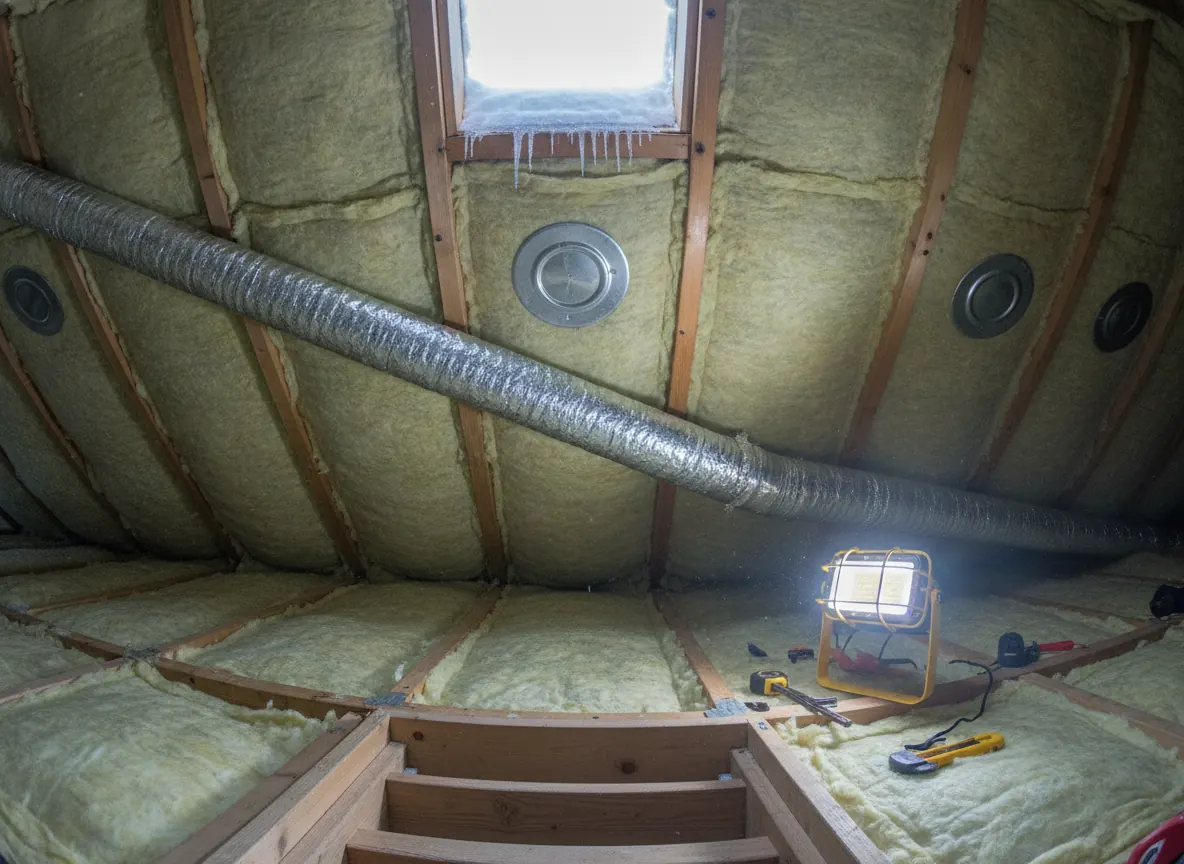
People are surprised to hear a mold company does steady work in a town with almost no muggy days. The dry-climate idea is true for July. It is not true for a sealed house in January.
Winter condensation. Bozeman's average January low sits around 12°F while modeled relative humidity peaks near 95%. Indoors, showers, cooking and breathing push moisture into warm air that then hits cold window frames, exterior-wall corners, rim joists and closets on north walls. The water condenses and mold follows.
Ice dams. With 86 to 91 inches of snow a year, heat leaking into the attic melts the roof from underneath and refreezes at the eaves. Water backs up under shingles and soaks insulation and drywall. One Montana company reported that about 60% of its prior-year ice-dam calls already had interior damage by the time they arrived, with north-facing roofs the worst.
Snowmelt and spring runoff. When the snowpack goes, water pushes against foundations and into crawl spaces. Four Corners sits over a shallow alluvial aquifer, roughly 80% of Three Forks is in a regulatory floodplain, and the June 2022 Yellowstone flood damaged more than 200 residences in Park County. Wet materials left more than two days are where growth starts.
Tight homes. Nearly 45% of Bozeman's housing was built after 2000, and much of it is sealed for energy performance and radon. A 2005 Gallatin County study found 40% of homes tested over 4 pCi/L of radon, so basements get sealed tight. Without balanced ventilation, that same tightness holds moisture inside.
Four steps, no surprises. You see the scope and the price before anyone sets up containment.
We look at the visible growth, meter the surrounding materials and find where the water is coming from. Sampling is offered when it will change a decision, not by default.
You get a plain-language scope listing what we remove, how we contain it, what we clean and what we recommend to fix the moisture, with a price attached.
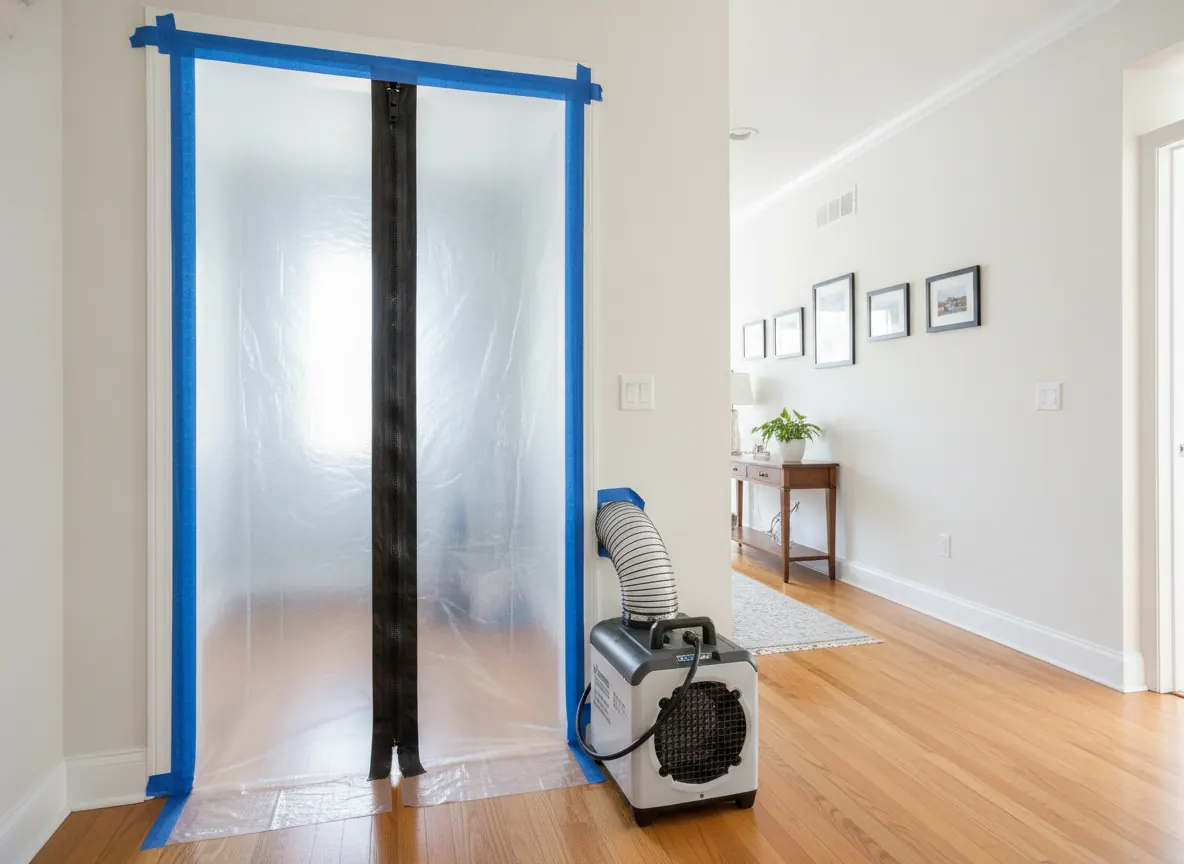
The work area is sealed in plastic under negative air with HEPA filtration. Porous materials that cannot be cleaned are bagged and removed. Framing and hard surfaces are cleaned and HEPA vacuumed.
Materials are dried to normal moisture levels and the containment comes down. If you want independent proof, we arrange optional third-party clearance testing before rebuild.
Typical ranges for the Gallatin Valley. Your written quote will be specific to your home.
| Job | Typical range |
|---|---|
| Small contained area (bathroom, under 10 sq ft) | $500 – $1,500 |
| Basement (one area) | $1,000 – $4,000 |
| Attic (ice-dam related) | $1,500 – $5,000 |
| Mold inspection + air/surface sampling | $300 – $700 |
Most Bozeman-area jobs fall between $500 and $6,000, with HVAC and whole-home work above that. See the full 2026 cost guide and estimate calculator →
Bozeman and the Gallatin Valley, plus Livingston over Bozeman Pass and Ennis on the Madison.
Most Bozeman-area jobs fall between $500 for a small contained bathroom area and $4,000 to $6,000 for a basement or water-damage room. Per square foot, expect roughly $10 to $25. Whole-home or HVAC jobs run higher. Our cost guide breaks down every job type, and every quote we send is a written scope before any work starts.
Yes. Summers are dry, but January lows average around 12°F and homes are sealed tight for heat. Warm indoor air hits cold windows, rim joists and attic sheathing and condenses. Add ice dams and spring snowmelt against foundations, and the Gallatin Valley gives mold plenty of winter and spring moisture.
Not always. If you can see mold and know the water source, testing mostly adds cost. Testing earns its keep when you smell mold but cannot find it, when a buyer or landlord needs documentation, or when someone in the home has asthma or allergies and you want a baseline. We will tell you honestly which case you are in.
Usually, yes. We seal the work area with plastic containment and run negative air machines with HEPA filtration so spores do not spread to the rest of the house. For small jobs you may barely notice us. For larger jobs or if someone in the home is sensitive, we will talk through whether a short stay elsewhere makes sense.
No. Montana has no state mold remediation license and no state or federal mold standard. That means anyone can advertise the service. Ask any company, including us, about technician training, whether they follow IICRC S520 guidelines, and whether they put the scope in writing before work begins.
Mold returns only if moisture returns. That is why every job we do includes finding the water source and recommending the fix, whether that is a bathroom fan, grading, a sump, attic air sealing or a plumbing repair. Removing the growth without fixing the moisture is the most common reason homeowners end up calling a second company.
Yes. Every quote starts with a free visit or a phone walkthrough, and you get a written scope with the typical price range before any work is scheduled. There is no fee for the estimate and no obligation to book, in Bozeman or anywhere in our service area.
Some do, some refer it out. We offer moisture mapping plus air and surface sampling when a test will change the plan, and we can arrange independent clearance testing after the job. If mold is clearly visible and larger than about 15 square feet, testing first is usually unnecessary.
Removal means physically taking mold-affected material out of the building. Remediation is the whole job: finding the moisture source, containing the area, removing or cleaning affected materials, filtering the air, drying, and verifying the result. Mitigation is a third term people use for the same work.
More answers on the full FAQ page, or read our guides on winter condensation and ice dams and attic mold.
Tell us what you're seeing. We reply fast, usually the same day, with a clear plan and typical pricing.