
Mold Inspection & Testing
Thermal imaging and moisture mapping to find where water got in.
Learn more →Ice dams, warm-air leaks and bath fans venting into the attic put mold on north-facing roof decks all over the Gallatin Valley. We clean it and show you how to stop it.
Get a Free QuoteAttic mold in Bozeman usually shows up in one of two ways. Either a home inspector sends a photo of black-streaked sheathing on the north side of the roof during a sale, or a brown ring appears on a bedroom ceiling in February after a week of ice at the eaves. By then the roof deck, rafters and insulation have been wet and warm for weeks, which is all mold needs.
Because nobody spends time in the attic, growth can spread across the whole north slope before anyone notices. It is not an emergency in the way a burst pipe is, but it does not get cheaper with time, and it can complicate a sale or an insurance claim.
Snow is the setup. Bozeman averages 86 to 91 inches a year and roofs carry it for months. Heat escaping from the living space, through can lights, attic hatches, bath fan ducts and thin insulation, melts the snow from underneath. The meltwater runs to the cold eave, refreezes and builds a dam. Water then pools behind the dam and works under the shingles into the sheathing and the top of the exterior walls.
The same leaking heat keeps the attic warm enough for mold to grow in winter. Add warm, humid indoor air rising through the ceiling, January relative humidity that is modeled around 95 percent, and bath fans that vent into the attic instead of outside, and the north roof deck, which never sees direct sun, stays damp until spring. NBC Montana reported that one local company found interior damage in roughly 60 percent of its prior-year ice-dam calls. Older homes in Bozeman’s historic districts with low insulation and newer homes with complicated rooflines and valleys both show up on our schedule.
Clean the wood, then stop the heat leak that caused the ice dam.
We meter the sheathing and rafters, map the extent of growth, check insulation depth, find every fan duct and heat leak, and note where ice dams have been forming. You get a written scope with photos.
We seal the attic access and any ceiling penetrations into living space, run HEPA air filtration, and protect the path through your home. Wet or contaminated insulation is bagged and removed.
Roof deck and rafters are HEPA-vacuumed, cleaned with detergent and antimicrobial, and dried. Heavily stained wood may be abrasively cleaned. We confirm moisture readings before closing up.
Every attic job comes with written recommendations: air sealing the ceiling plane, insulation to depth, rerouting bath and dryer vents outside, and checking soffit and ridge ventilation. Roof repair and insulation contractors get a clear list.
| Job | Typical range |
|---|---|
| Attic (ice-dam related) | $1,500 – $5,000 |
| Small contained area (localized growth near a vent) | $500 – $1,500 |
| Post-remediation clearance test | $200 – $400 |
Attic jobs carry a higher per-square-foot modifier than basements because of access and insulation removal. See the full price table and calculator on our mold remediation cost guide, or request a free quote for a written scope on your home.
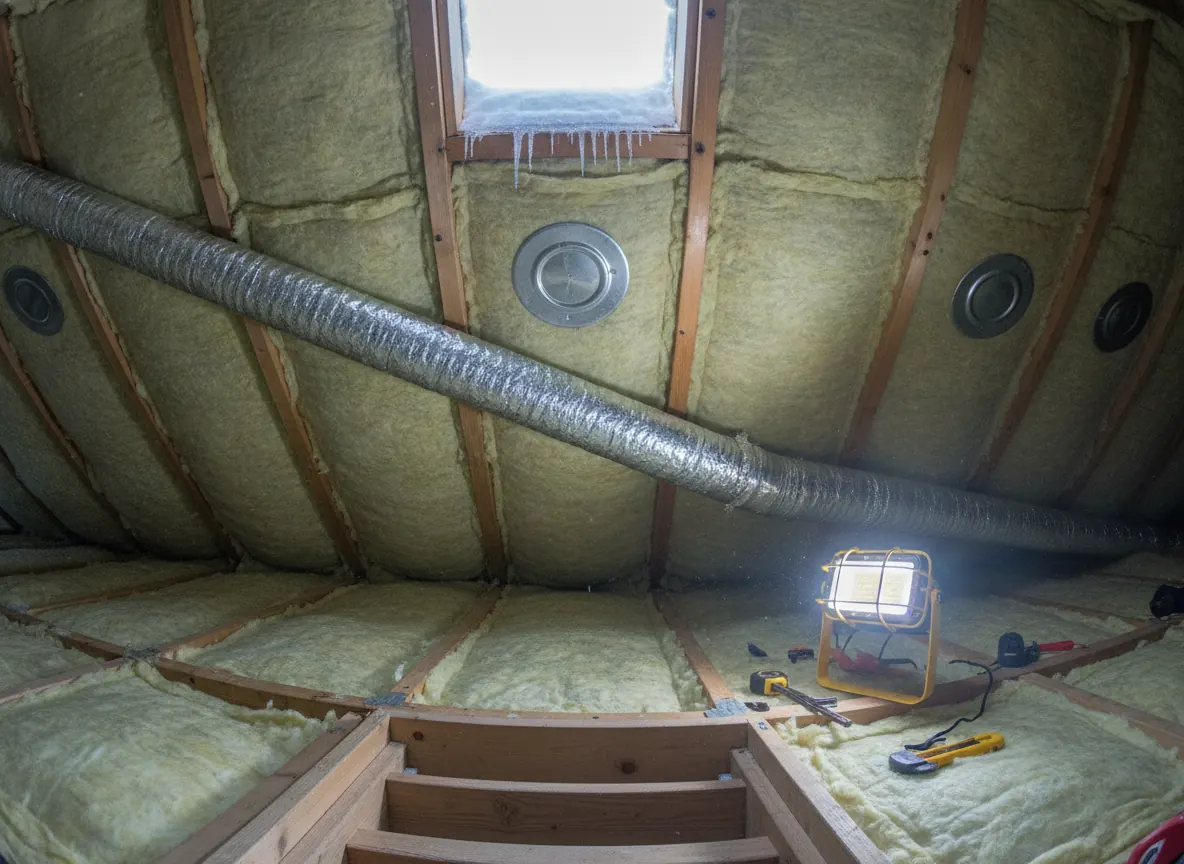
Three things show up on almost every attic job we do in the Gallatin Valley. The north roof slope is moldy while the south is clean, because the sun clears the south side and never touches the north. A bath fan or dryer duct ends in the attic, dumping a shower’s worth of moisture onto cold sheathing every morning. And there is a path for warm air to rise, whether a leaky attic hatch, open chases around plumbing, or recessed lights without covers.
Fixing those three is what keeps an attic clean after we leave. We document each one with photos so your roofer, insulator or handyman knows exactly what to do.
An ice dam forms when heat leaking into the attic melts roof snow from underneath, the water runs to the cold eave and refreezes. Water backs up behind the ridge of ice and gets under the shingles, soaking sheathing, insulation and the top of exterior walls. That same heat leak keeps the attic warm and humid, so the wet wood never dries. Mold follows within days.
Yes. One Montana company told NBC Montana that about 60 percent of its ice-dam calls from the prior winter already involved interior damage by the time it arrived. With 86 to 91 inches of snow a year and January lows near 12°F, Bozeman roofs hold snow for months, and north-facing slopes are the worst because the sun never clears them.
It does. We regularly find bath fans and even dryer vents terminating in the attic, where every shower pumps warm, wet air onto cold sheathing. Over a winter that alone can grow mold across the north side of a roof deck. Rerouting the duct through the roof or gable with an insulated run is a small job that prevents a large one.
Most ice-dam-related attic jobs in the Bozeman area fall between $1,500 and $5,000. Attics cost more per square foot than basements because of access, steep pitches, and the insulation that usually has to come out. If roof repair or re-insulation is needed, those are separate. The cost guide walks through the modifiers.
Only if the heat and moisture do. Remediation cleans the sheathing and framing; what keeps it clean is air sealing the ceiling, bringing insulation up to depth, venting fans outside and making sure soffit and ridge vents actually move air. We put those recommendations in writing with every attic job so you can get them handled before the snow returns.
Thermal imaging and moisture mapping to find where water got in.
Learn more →Ceiling leaks, saturated insulation and the 24–48 hour drying window.
Learn more →Typical Bozeman-area price ranges, a square-foot calculator and the factors that move a quote up or down.
Learn more →This service is available across Bozeman & the Gallatin Valley, MT, including:
See all service areas or learn how our process works.
Tell us what you're seeing. We reply fast, usually the same day, with a clear plan and typical pricing.